Work on AI Safety Governance & Strategy
Where our alumni are now
Recommended by 98% of participants
Free for you
Food, accommodation, and teaching are all provided at no cost to participants. Travel costs may be reimbursed if they're a barrier to attending
Close to home
Everyone in a bootcamp comes from the same region so you'll be learning alongside people you can stay in touch with
Great People
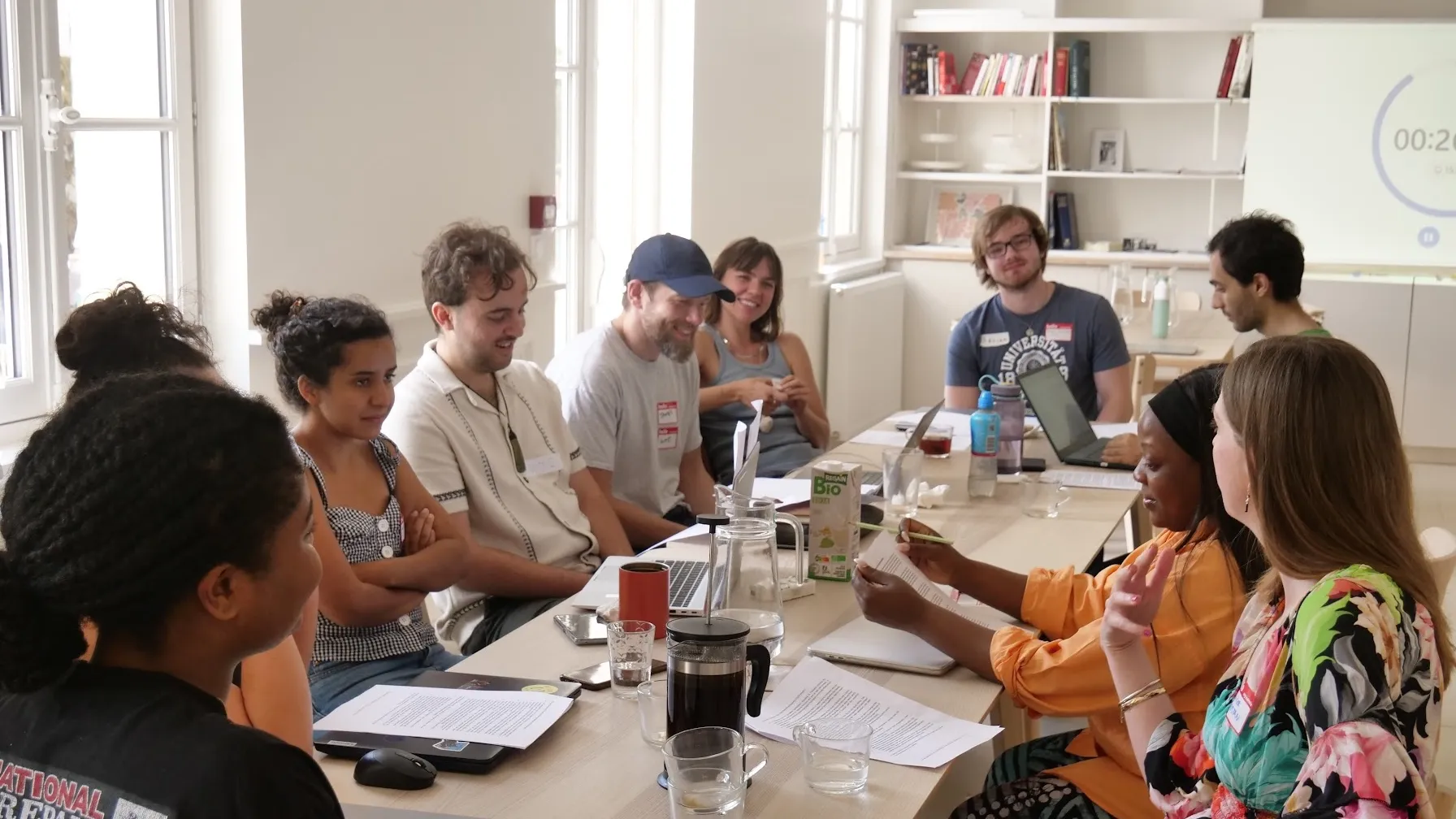
Work alongside talented and motivated people who are committed to making an impact
In English
All sessions, materials, and discussions are conducted in English
All backgrounds welcome
We look for people from all walks of life who are committed to contributing to AI safety
A focused environment
Accommodation is on-site and participants stay at the venue for the duration of the bootcamp
Curriculum
Themes
Technical Foundations
AI architectures, key fields of study, how large language models work
Understanding risks
Catastrophic and existential risks, misuse, loss of control
AI Governance
Political economy, corporate governance, compute governance
Strategy
Scenario planning, analysing governance developments, understanding policy levers
Communication
Articulating AI risks clearly, adapting messages for varying audiences
Career Planning
1-on-1 mentorship, pathways to contribute to AI Safety, post-camp action planning
Applied Projects
Afternoon literature review, a 2-day capstone project with mentorship and structured feedback
Typical schedule
Governance frameworks, technical grounding, policy analysis
Case studies, readings, group debates
Scenario planning, communication training, applied exercises
Group projects, 1-on-1 career mentorship
Guest speakers, Q&A sessions, social events
Eligibility
AI is going to transform every part of society, and getting it wrong could be catastrophic. Helping to steer it towards a safer outcome will require people of every background. We don't expect any prior technical knowledge.
The ideal candidate is somebody committed to contributing to AI safety in a substantial way, either through pivoting to full-time AI Safety work in governance or strategy, building the AI Safety ecosystem, or otherwise contributing through their work or free time.
We're looking for participants from a variety of backgrounds, from skilled generalists, policy professionals, technical people looking to go into strategy or governance, to those with a background in communication, law, policy or entrepreneurship.
We're most excited about people who are ready to contribute to AI safety, be that someone with decades of work experience, someone who has just finished their master's or PhD, or someone early in their career.
We expect participants to have some familiarity of the major risks from AI (e.g. misuse from bad actors, extinction risks) and a rough overview of some proposed solutions. We provide a prerequisite reading list to give everyone enough shared understanding to make the most out of the camp.
Upcoming bootcamps
New cohorts coming soon
Sign up to be notified when applications open.
Meet our teachers
![6811dc4136d8f0a3145ce64f_auriane.jpg [airtable:attEqwBTIBI7tvDmI]](https://ml4g.foreviewusercontent.com/images/6811dc4136d8f0a3145ce_dCo7PnL.2e16d0ba.fill-320x384.format-webp.webp)
Auriane Técourt
Curriculum Developer, Teacher
A multidisciplinary engineer working on AI policy in the private sector, previously researching AI governance at a think tank. Auriane's background in teaching enables clear communication of complex technical topics to non-technical audiences.
![elsa_profile.jpg [airtable:attDAmYpnBM4AThuM]](https://ml4g.foreviewusercontent.com/images/elsa_profile_P9vWU1P.2e16d0ba.fill-320x384.format-webp.webp)
Elsa Donnat
AI Policy Fellow
Elsa is an AI Policy Fellow at Ada Lovelace Institute. She studied law before moving into AI governance, completing many programmes in the field including ML4Good, MARS, Orion and Talos. Last summer, she was a summer fellow at GovAI where she explored legal issues surrounding future autonomous/AI-run businesses, specifically legal personhood and corporate law.
![charbel_fancy.jpg [airtable:attkDzkPE4UhyT7xM]](https://ml4g.foreviewusercontent.com/images/charbel_fancy.2e16d0ba.fill-320x384.format-webp.webp)
Charbel-Raphael Segerie
Co-founder, Curriculum Developer
Charbel is the Executive Director of CeSIA. He organized the Turing Seminar (MVA Master's AI safety course), initiated the ML4Good bootcamps, served as TA for ARENA and MLAB, and previously worked as CTO of Omnisciences and researcher at Inria Parietal and Neurospin.
Past bootcamps
![32657_anonymized.jpg [airtable:attPdN4DH7DgbyZ3M]](https://ml4g.foreviewusercontent.com/images/32657_anonymized.2e16d0ba.fill-600x400.format-webp.webp)
France - September '26
![IMG_5725.jpg [airtable:attwWUYUiXz7uHnYU]](https://ml4g.foreviewusercontent.com/images/IMG_5725.2e16d0ba.fill-600x400.format-webp.webp)
France - June '26
![frameblur.png [airtable:att8v1XMLKX26eF2c]](https://ml4g.foreviewusercontent.com/images/frameblur.2e16d0ba.fill-600x400.format-webp.webp)
France - May '26
![Untitled design (11).png [airtable:attBZWDWhHCAmZeOp]](https://ml4g.foreviewusercontent.com/images/Untitled_design_11_gj.2e16d0ba.fill-600x400.format-webp.webp)
South Africa - April '26
![693fcf1d3789c43572241279_IMG_4576.jpg [airtable:attIlQSwgIpOTh9uA]](https://ml4g.foreviewusercontent.com/images/693fcf1d3789c43572241_nc0lCrm.2e16d0ba.fill-600x400.format-webp.webp)
France - October '25
![Community.JPG [airtable:attnOBzMgHOUtBTs2]](https://ml4g.foreviewusercontent.com/images/Community_zlyY8pC_Dc79gbn.2e16d0ba.fill-600x400.format-webp.webp)
France - July '25
Interested in bootcamps in your region?
No bootcamp in your area yet? Tell us where you are. We prioritise new locations based on interest from potential participants.